Voice Search + Accessibility: Why Structure Wins
February 25, 2026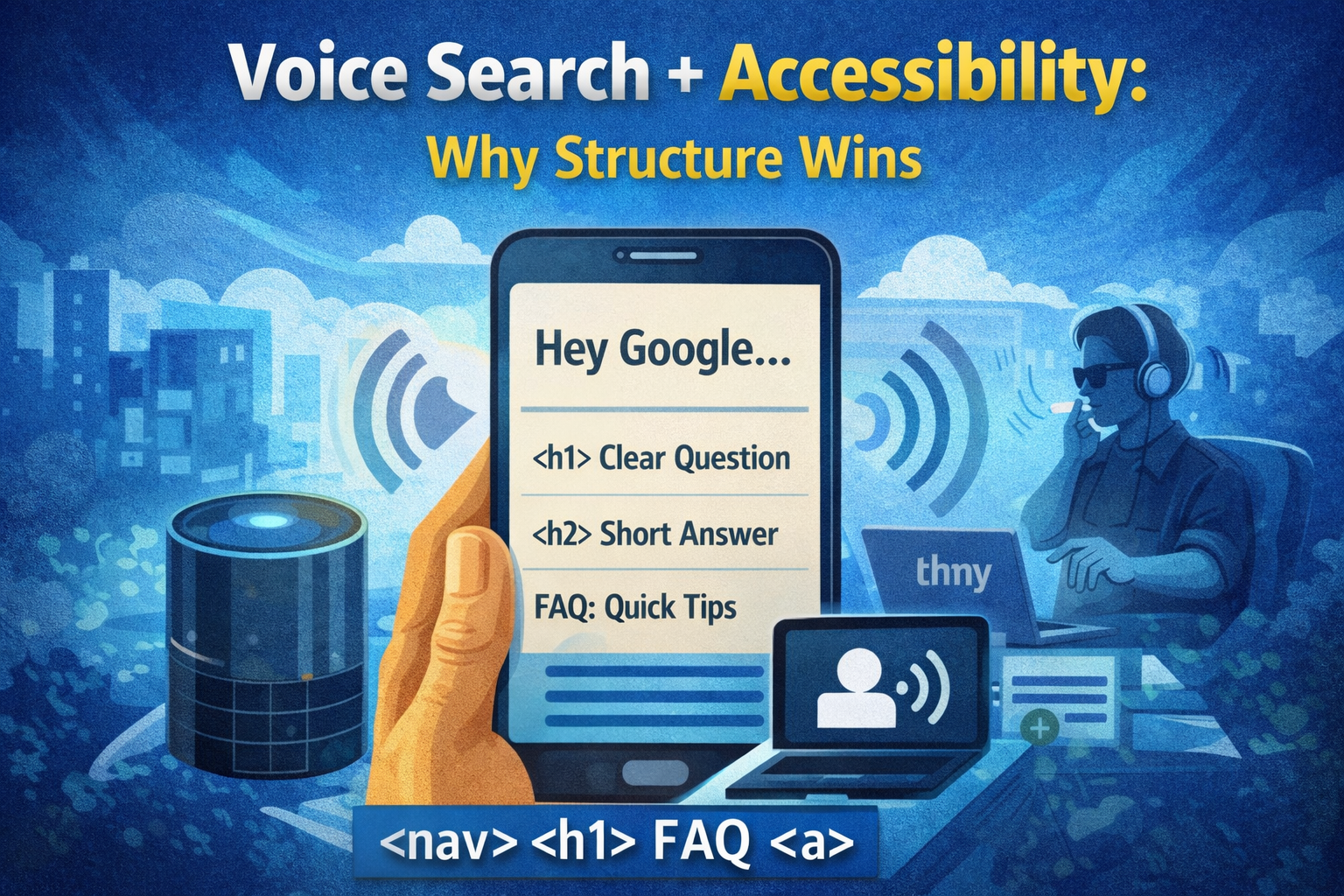
Key takeaways
- Voice search users want answers fast; structure makes answers extractable.
- Accessibility and voice search overlap: both rely on semantic clarity.
- Clear headings + FAQs improve machine understanding and human scanning.
- Accessible navigation helps voice-driven and mobile users complete tasks.
- Structure also boosts conversion by reducing friction and increasing trust.
Introduction
Voice search is not “the future” it’s already normal. People ask questions while cooking, walking, commuting, or multitasking. And in those moments, they don’t want a website… they want an answer.
Here’s the hidden advantage: the websites that perform best for voice are usually the same ones that are most accessible. Why? Because assistants and screen readers depend on structure, not visual design.
1) Assistants need answers they can extract
If your page buries the main point under vague copy, assistants struggle. Structure that helps:
- One clear H1 that matches intent
- Short intro that answers the query quickly
- H2 sections that map to sub-questions
- FAQ blocks with direct Q/A formatting
Think: “Can a machine understand this page in 5 seconds?”
2) Accessible navigation improves voice-driven journeys
After the answer, users still need to take action. Accessible navigation helps voice and mobile users complete tasks:
- Consistent labels (Services, Pricing, Contact)
- Descriptive button text (Request a quote, Book a call)
- Skip-link support and logical tab order
- Readable, predictable page flow
3) Structured content reduces bounce and increases trust
When users arrive from a voice query, they’re often in a hurry. Structure increases trust:
- Clear “who this is for” section
- Trust signals (reviews, portfolio, process)
- Fast contact paths (form + email + phone)
Accessibility isn’t only ethical it’s profitable UX.
4) The structure checklist to align accessibility + SEO
- Semantic elements:
<main>,<nav>, real buttons and labels - Headings: no skipped levels, no heading spam
- FAQs: concise answers that match real queries
- Internal linking: blog → service page → contact
- Performance: reduce JS bloat and improve mobile load
FAQ
Do I need special “voice search SEO” tactics?
Mostly you need clarity: strong headings, direct answers, and structured FAQs. If your content is accessible and well-organized, you’re already aligned with voice behavior.
How do I choose questions for FAQs?
Use real buyer intent: pricing, availability, timelines, process, and location/service fit. Keep answers short and specific.
What accessibility changes help voice search the most?
Semantic HTML, clear heading hierarchy, descriptive links/buttons, and concise answers near the top of the page.
Does internal linking matter for voice-driven traffic?
Yes. It guides users from quick answers to conversion paths and helps search engines understand topic clusters and page importance.
How long until structure improvements impact results?
You can see crawling/indexation improvements quickly, but visibility and conversion gains typically show over 30–60 days as search engines reprocess signals.