Multilingual SEO Audit for Gatsby & React Sites
January 27, 2026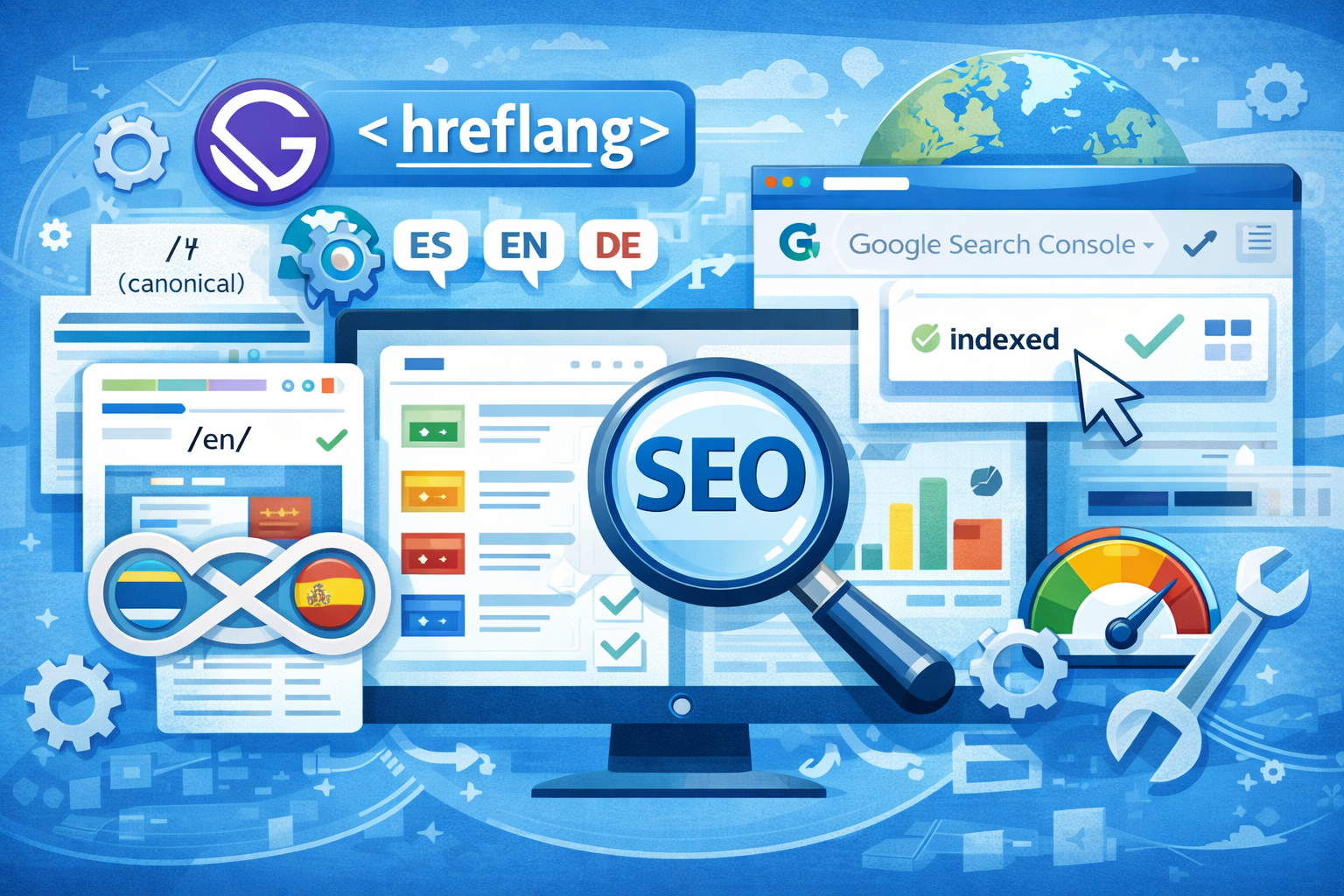
Key takeaways
- Pick one URL structure: default language without prefix + other languages prefixed.
- Canonical must be self-referential per language (no collapsing all to default).
- Add full hreflang alternates + x-default on every localized page.
- Fix crawl/index hygiene: sitemap success, robots, redirects, 404s, ghost paths.
- Use internal links from blog → services/portfolio/contact to drive authority + leads.
Introduction
Multilingual sites often lose traffic for one simple reason: search engines can’t confidently choose the right page for the right language. The result is duplication, cannibalization, and unstable indexing especially on Gatsby/React builds.
This guide shows a practical audit workflow you can apply today: what to check, what to fix, and how to verify improvements with Google Search Console.
1) Confirm your language URL strategy
Pick one structure and enforce it everywhere:
- Default language without prefix (example:
/) - Other languages with prefix (example:
/en/,/es/)
Inconsistent patterns create duplicates and confuse canonical selection.
2) Canonical must be deterministic per language
Each localized page should declare a canonical that points to itself (same language URL). Avoid canonicals that point all languages to the default page this collapses indexing.
3) hreflang alternates: the traffic stabilizer
Every page should declare rel="alternate" hreflang links for each language variant, plus x-default. This prevents language mismatch and strengthens Google’s confidence in which version to rank.
4) Crawl & indexation hygiene
- Verify sitemap index is “Success” in Search Console.
- Ensure
robots.txtallows crawling and references your sitemap. - Eliminate “ghost paths” and orphan pages.
- Fix redirect chains and 404s.
5) Internal linking: connect content to money pages
Your blog should feed your services and conversion paths:
- Link to SEO and Web Design & Development
- Add at least one link to Portfolio
- Include a direct CTA to Contact
FAQ
Do I need hreflang if I already have separate /en and /es pages?
Yes. hreflang clarifies language targeting and helps Google choose the right version. Without it, indexing can be unstable and pages can cannibalize each other.
Should canonicals point to the default language page?
No. Each localized page should canonical to itself. Pointing everything to the default language often causes deindexing of other languages.
How do I validate multilingual SEO fixes?
Use Search Console’s URL Inspection to compare “user-declared canonical” vs “Google-selected canonical”, confirm indexation, and monitor clicks/impressions by language over 30–60 days.
What’s the most common multilingual SEO mistake on Gatsby sites?
Inconsistent routing + incorrect canonicals (or missing hreflang), which creates duplicates and forces Google to guess which page to rank.
How long until multilingual fixes improve traffic?
Indexation stabilization can happen within days/weeks, but meaningful growth typically shows over 30–60 days as Google recrawls and re-evaluates signals.