GA4 + GTM Conversion Tracking for Lead-Gen Websites
February 12, 2026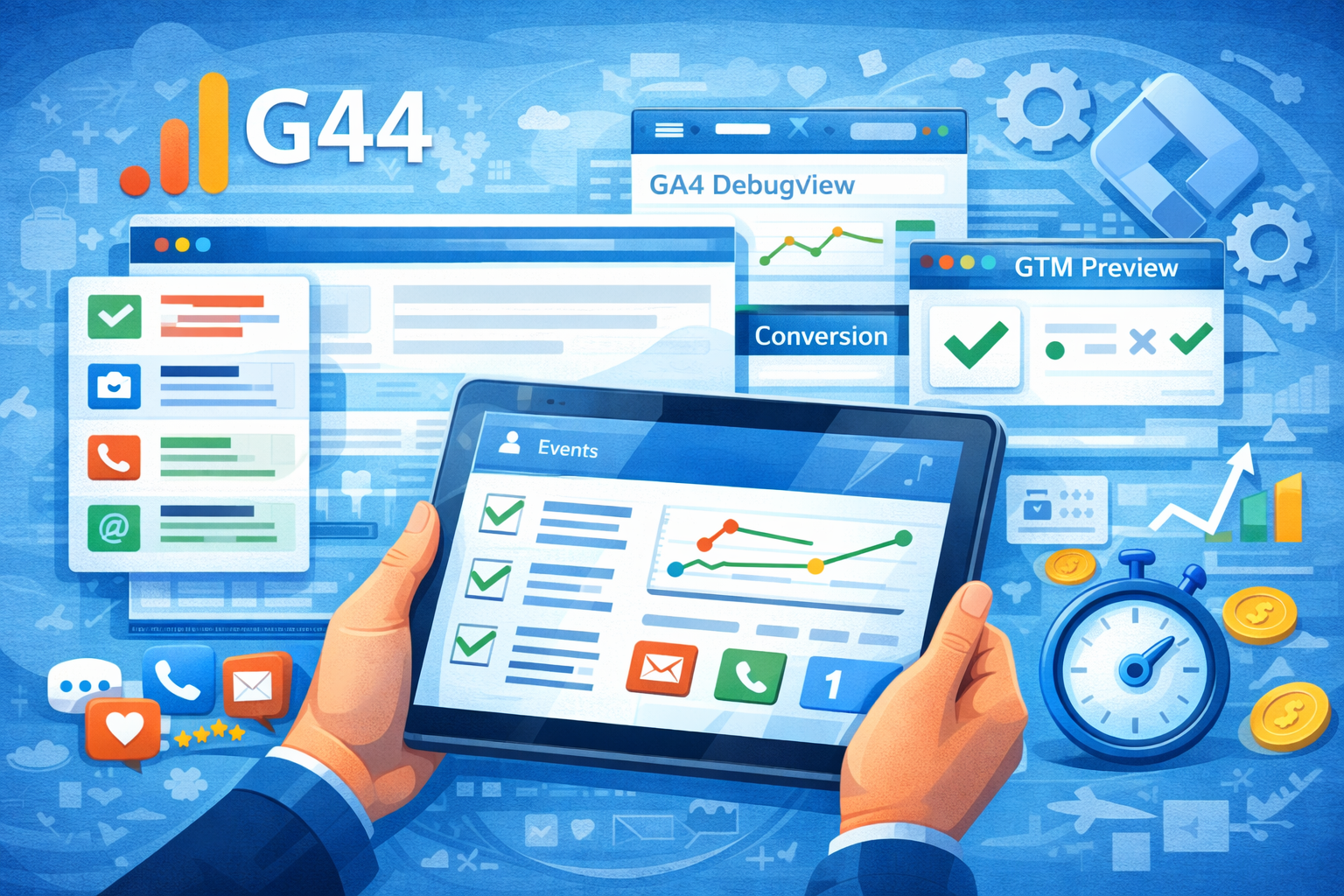
Key takeaways
- Define conversions: form submits, call/email clicks, WhatsApp/booking actions.
- Use a clean GA4 event plan with consistent naming (avoid tracking everything).
- Validate with GTM Preview + GA4 DebugView (events should fire once).
- Use data to improve CTAs, landing pages, and internal links monthly.
- Measure before/after over 30–60 days on your key service pages.
Introduction
If you can’t measure leads, you can’t improve them. Most service websites have analytics installed but conversions aren’t defined, events are duplicated, and reports don’t match reality.
1) Define what “conversion” means
- Form submit (contact, quote, audit)
- Click-to-email
- Click-to-call
- WhatsApp / booking clicks
2) Build a clean event plan
Use consistent naming and keep tracking lean. Track only actions that map to revenue outcomes.
3) Validate tracking (no guessing)
- GTM Preview to confirm triggers fire once
- GA4 DebugView for real-time event flow
- Compare “submit” events with CRM/inbox reality
4) Turn tracking into monthly wins
With clean data, you can improve pages monthly: CTA placement, friction reduction, better internal linking, and landing pages for campaigns.
FAQ
Should I use GA4 alone or GA4 + GTM?
GA4 + GTM is best for clean control: consistent events, fewer duplicates, and easier iteration as your site evolves.
What events matter most for service businesses?
Form submissions, click-to-call, click-to-email, WhatsApp/bookings plus a few key CTA clicks on service pages.
How do I validate events are correct?
Use GTM Preview to ensure triggers fire once and GA4 DebugView to confirm the event flow in real time.
Can tracking hurt site performance?
It can if bloated. Keep GTM lean, avoid unnecessary vendors, and use one clean container with minimal tags.
How do I connect tracking to SEO improvements?
Track conversions by landing page. Then optimize the pages that drive traffic but under-convert: copy, layout, CTAs, and internal links.